
Arrest Warrants in Louisa County
Louisa County arrest warrants follow one statewide procedure. It starts with a sworn statement. A complaint or a witness's information given under oath goes to a judicial officer, who reviews whether probable cause exists. Virginia Code §19.2-72 governs this review statewide. A felony complaint must be in writing, and once issued, the warrant tells an authorized officer to arrest the accused and bring that person before a court. The magistrate usually issues the process, though a General District or Circuit Court may hold the case after filing, depending on the charge. The complaint, the signed warrant, and any supporting affidavit sit as separate records, and some of them never become public.
Louisa County Arrest Warrants Start With Oath
State law sets the same oath requirement for every Louisa County warrant. Before an arrest warrant issues, a judicial officer must hear sworn complaint material and find probable cause. The document itself has a checklist. It names or describes the person, describes the offense, orders arrest and an appearance before a court, and carries the issuing officer's signature. Where a town ordinance is involved, the statute spells out the code provision and how an authorized officer serves the paper. Note one limit, though: the public does not gain access to the underlying affidavit or investigative file. Virginia Code §19.2-72 gives the full official text of these requirements.
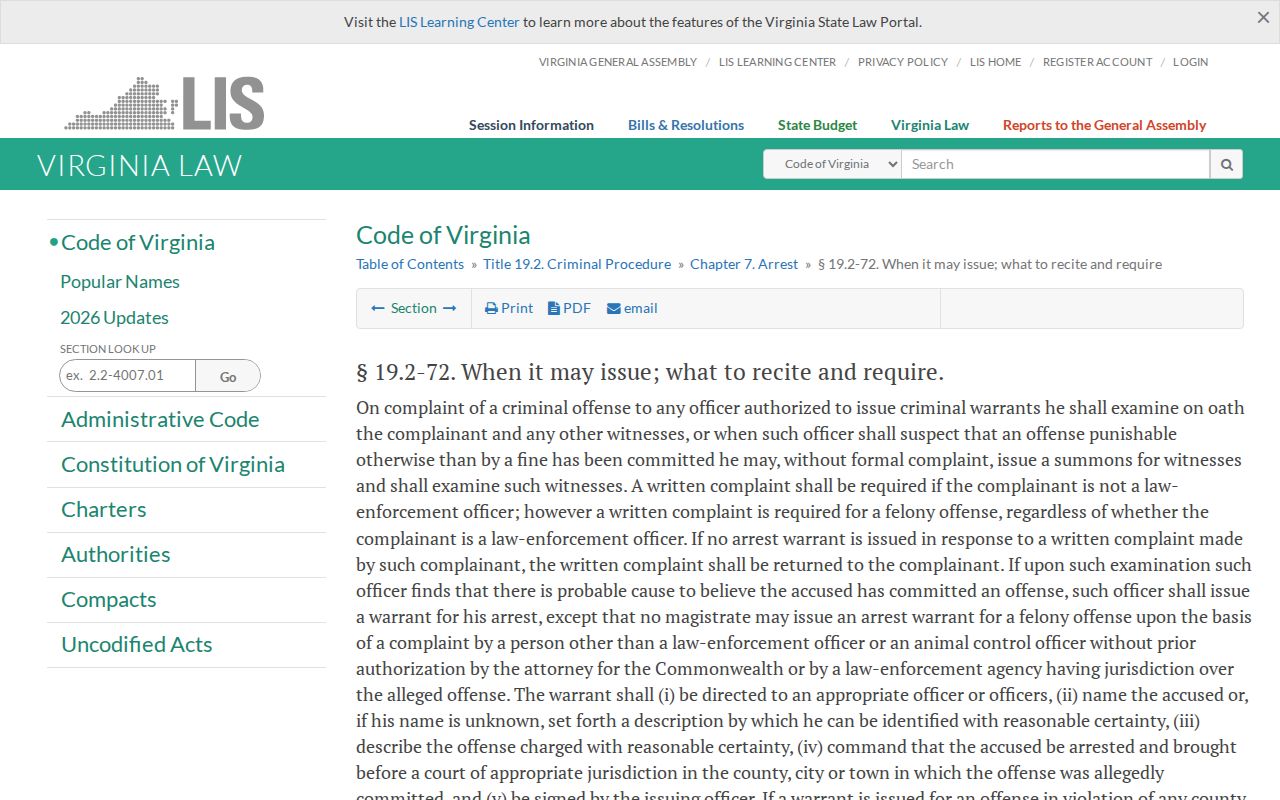
The statute text spells out the oath and probable-cause checklist; it is not a Louisa County warrant form or a sample number.
What a Louisa County Arrest Warrant Contains
Virginia law lists what a warrant must contain. OCIS, the courts' system, shows selected case information for a search. Neither source reveals a fixed Louisa County warrant-number format, and a public case screen does not promise to show bond or active status.
| Person named | The warrant identifies or describes the person to be arrested. |
|---|---|
| Offense | The charge or offense must be described in the warrant. |
| Command | It directs an appropriate officer to arrest and bring the person before court. |
| Issuing signature | The judicial officer signs the process. |
| Case detail | OCIS may show court, case number, charge, hearing, and service-of-process information. |
| Bond and current status | Not guaranteed on a public case result; confirm with the clerk or magistrate. |
The clerk holds the signed record, so ask for the exact document and about any redactions or access limits. Louisa County publishes no public warrant-number format.
Magistrate District 16 Has Two Posted Numbers
Louisa County sits in Magistrate District 16, Region 4, and the posted phone numbers for the Louisa office do not agree. The statewide directory lists 540-967-3493, while the Sheriff FAQ lists 540-967-4564. Confirm the current duty number and location before traveling to either one. Magistrates review complaints, issue warrants, and hold bail hearings, but they cannot change a capias controlled by another court, so ask the clerk which official handles your process. Virginia Magistrates explains the role statewide.
How Louisa County Arrest Warrants Are Served
Service of Louisa County arrest warrants belongs mainly to the Sheriff's Uniformed Patrol, which the department expressly assigns to serve criminal warrants. Riskier entries may go to the Special Response Team, a unit trained for high-risk service. Louisa Police handles town traffic and criminal complaints and can play a part in town process, and Virginia State Police or another authorized agency may serve a matter filed locally too. Court security and civil process are separate jobs. The Civil Process & Court Services unit secures the local courts and serves listed civil papers, but it is not a criminal-warrant lookup desk. For service status on a Louisa County warrant, call the Sheriff's public non-emergency line. The office does not advertise a dedicated warrant division phone, so the general line is the route.
Louisa County Sheriff Patrol Serves Criminal Warrants
The county's own Uniformed Patrol page puts serving criminal warrants squarely on patrol's shoulders. That duty stands apart from civil process service and from courthouse security. Anyone checking a Louisa County record should read which agency the paper names, whether the Sheriff, Louisa Police, State Police, or another authorized office. The Sheriff's organization page also describes a Special Response Team trained for high-risk service. That is structure, not a forecast for any particular case. For service questions, use the Sheriff contact route. The Sheriff's official page carries its contact details and service information, while the issuing clerk answers court status.
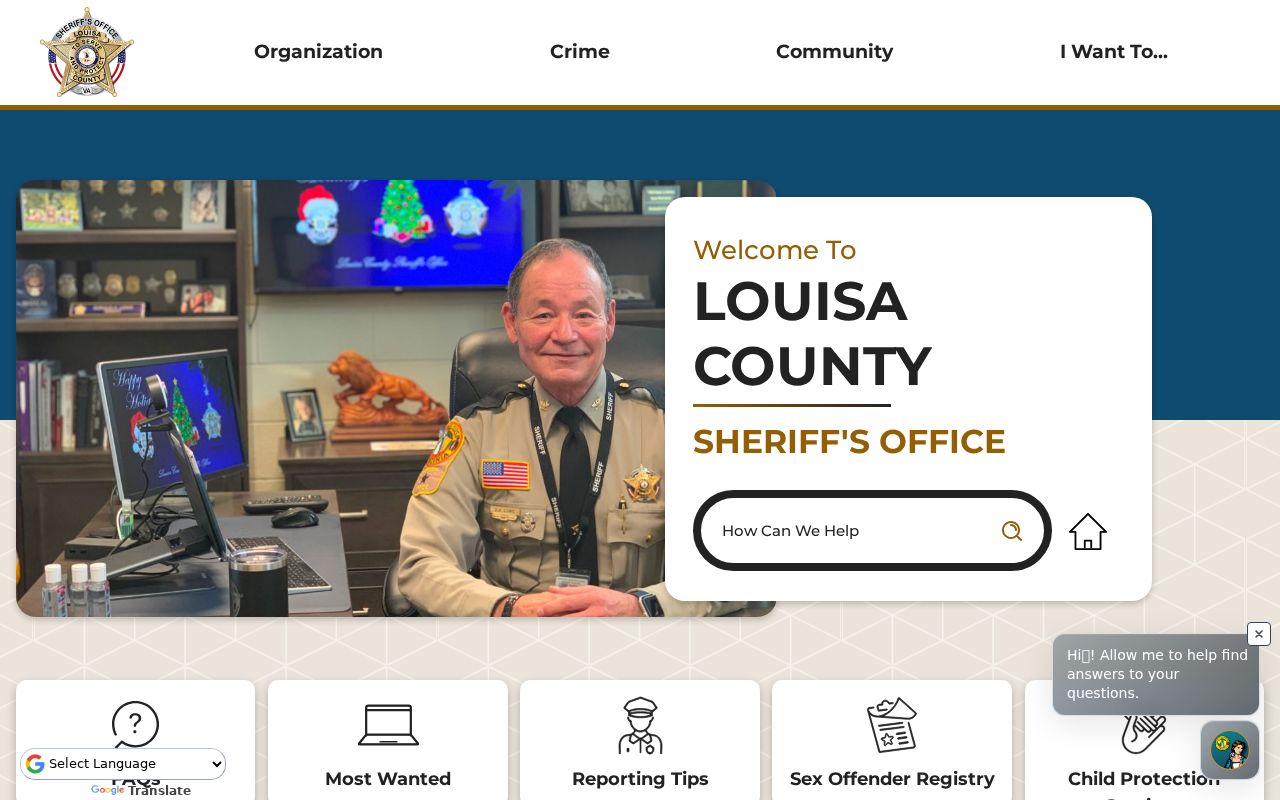
Split the questions: the Sheriff contact route for service, the issuing Louisa County clerk for court status.
Arrest Warrant vs Summons vs Bench Warrant
These Louisa County terms are not interchangeable. An arrest warrant comes after a probable-cause review. A summons simply orders a person to appear. A bench warrant, or capias, grows out of an existing court obligation. The paperwork and the issuing office matter far more than an informal label.
| Feature | Arrest Warrant | Summons | Bench Warrant |
|---|---|---|---|
| What It Orders | Arrest and court appearance | Appearance on a set date | Arrest or return to court after an obligation |
| Basis | Complaint and probable cause | Notice to appear | Missed date or court condition, depending on the case |
| Who Issues It | Magistrate or authorized court officer | Court or authorized officer | Issuing judge or court |
| How to Respond | Confirm status and ask about court or bond steps | Attend on the date shown | Ask the issuing clerk about appearance or recall |
A summons, then, is not itself a Louisa County arrest warrant. A search warrant differs again, since it authorizes a search rather than an arrest.
A Search Warrant Is Not an Arrest Warrant
Louisa County press releases sometimes mention a search warrant in an investigation. That document works under a separate legal process and authorizes a search, not an arrest, so it never appears as a person's arrest status in OCIS or on the Sheriff Most Wanted page. A January 2026 Sheriff release showed the sequence clearly: a search warrant first, then a person's appearance before a magistrate, then issuance of arrest process. Those are distinct steps, not one combined event. Virginia's search-warrant statute supplies the state framework for that separate process.
What to Do If There Is a Warrant for You
If a Louisa County arrest warrant might carry your name, call the issuing clerk. Ask the clerk to confirm the case and the proper next step. A lawyer can discuss a motion to recall or quash, a planned surrender, and bond review. The county posts no bond schedule, surrender form, or walk-in hours, so get instructions straight from the court.
Important: Call counsel, the issuing clerk, or Sheriff before traveling; local bond and surrender instructions are not published, so do not appear unannounced.
Call the clerk first. Ask if the warrant is still active, which agency holds service information, and whether a magistrate must review bail. Also ask where the person should report in Louisa County. A blank list result answers none of that. Keep written proof of any recall or court date. The Louisa warrant resolution route lays out the shared clerk and Sheriff steps in one place.
Louisa County Arrest Warrants Need Current Confirmation
OCIS can point you to an underlying case. It does not promise a complete active-warrant field. The Louisa County Sheriff Most Wanted page is curated, so it shows no full status schema. A signed warrant, a service return, and the current docket status can sit with three different offices. For a felony matter, the Circuit clerk may hold the case record, while a GDC matter belongs to its own clerk. JDR access may be limited. The agency named on the paperwork identifies the proper service contact. No public search counts as legal advice or proof of present status, so call the issuing Louisa County court and ask what it has recorded today.